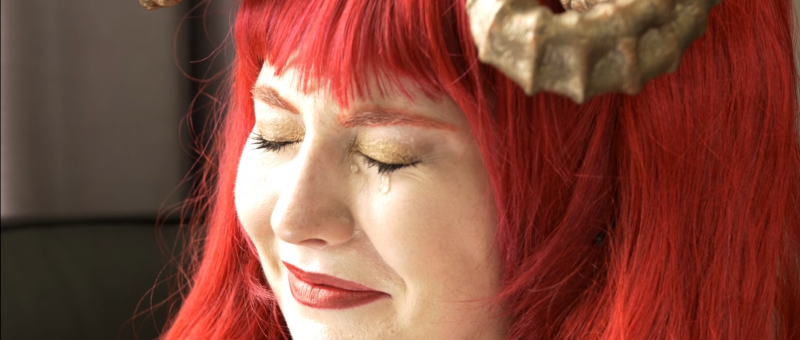
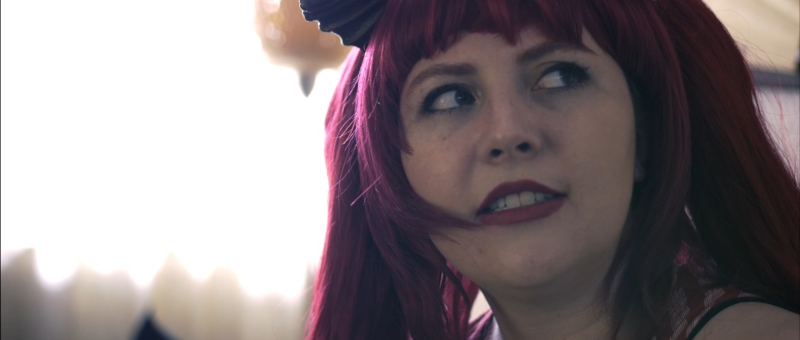
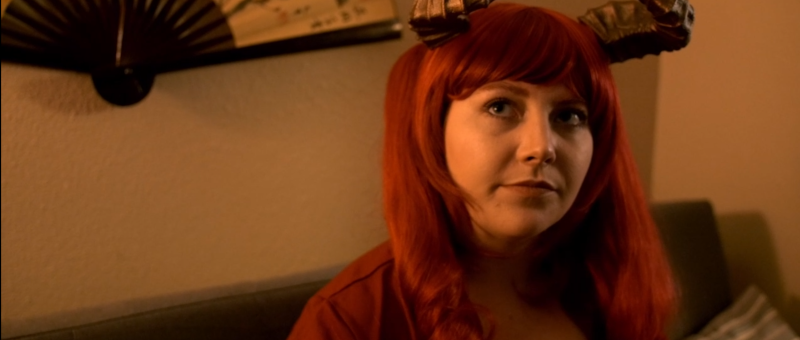
This short film explores beauty, art, and objectification. How do we shift from the good things of beauty and art into the destructive realm of objectification? What's the difference between appreciating a pretty girl's looks and sexualizing her?
Behind the Scenes
For your convenience, here are the six chapters of the Behind the Scenes video:
- Story - 0:00
Explore the over-arching themes as well as the writing and script editing process.
- Cast & Crew - 5:20
Hang on for the wild ride of finding people willing to commit to a project and the ups and downs of putting your "perfect" idea out into an imperfect world.
- Pre-Production - 13:10
What does it take to get a movie up and running? Here we walk through locations, technology, lighting, props, and more!
- Production - 21:57
Immerse yourself in the middle of the action as each day of filming unfolds. This is what it's like to be on a zero-budget film set with Luke Holzmann and team.
- Post-Production - 40:46
Witness the highs and lows of learning new software, editing for over 30 days for a 7 minute project, and all the tiny changes that make a huge impact on the quality of your film.
- Epilogue - 53:10
Take a few minutes to chat, one-on-one, with a few of the young women who were part of this project; hear their stories and find some encouragement for your own struggles.
This film took seven months to complete, almost to the day. I share a lot about that in the Behind the Scenes above; I'm not going to bother transcribing an hour's worth of content here. There's so much good stuff in the video -- and I worked really hard to put to it together -- so watch it and then read on for even more.
I kept bumping into my own personal limitations throughout this process. In earlier shorts, I could (and did) do "everything": Writing, directing, producing, editing ... even acting a bit. As the years have gone on, and my projects have become more ambitious, I've needed more and more people to make the films a reality. And this movie broke several aspects of my personal self-reliance that were probably a bit unhealthy. I clearly needed help with photography, filming, gathering extras, writing, editing, and producing. I may have still been the one doing some of those things, like writing and editing, but without outside input, the final project would have been far weaker. And had people not agreed to help out, there would be no movie, just a quirky script in a Google Doc.
As is, whenever we hit a roadblock, I wanted to quit. Each challenge proved too much for me and bruised my ego by demonstrating clearly how inadequate I am as a person. I can't do it on my own. I do not have the skills. I don't know what I'm doing. I need help. For someone as naturally prideful as I, this was overwhelmingly painful, to the point where I would often end up laying on the floor, the epitome of
can't even. I think this ego crushing may be getting worse as the projects get more ambitious. When you're no longer simply recording a conversation at the park, things get messy and difficult and expensive. I am so grateful that Brittany (my Producer) and Jonathan (my DP) were as involved this time as they were. We got such a great video from it!
Some lessons (not covered in the video above):
Framing is important (the belly button)
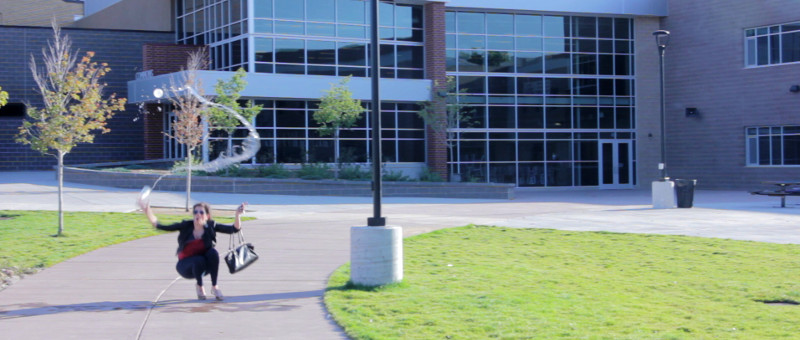
This may feel like a no-brainer. But while shooting, we got the wide shot of this scene:
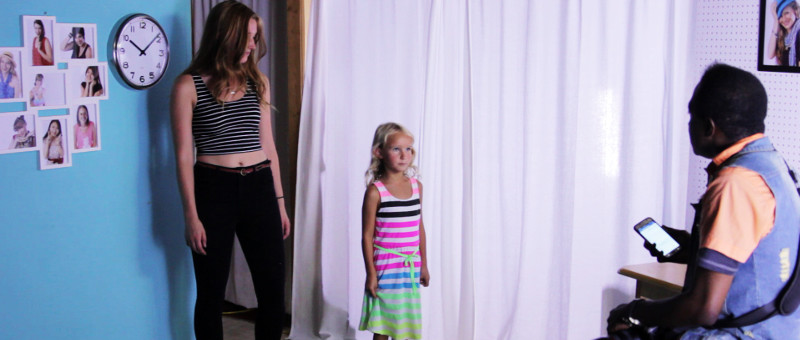
When we went in for the closeup, Abby was no longer in frame:
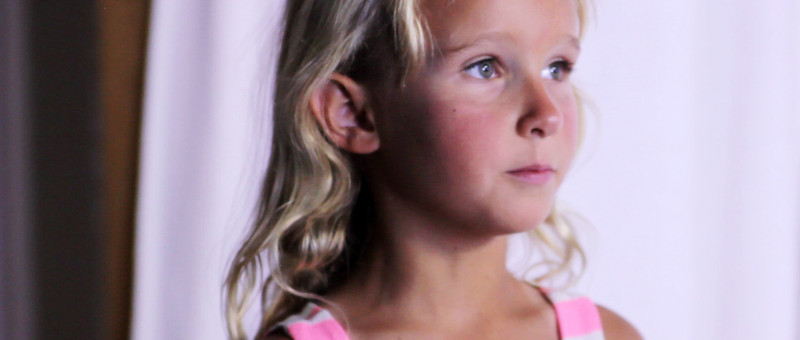
That's when I asked Elise to move a couple steps over. As her navel came into frame, Jonathan looked at me and said, "I see what you did there."
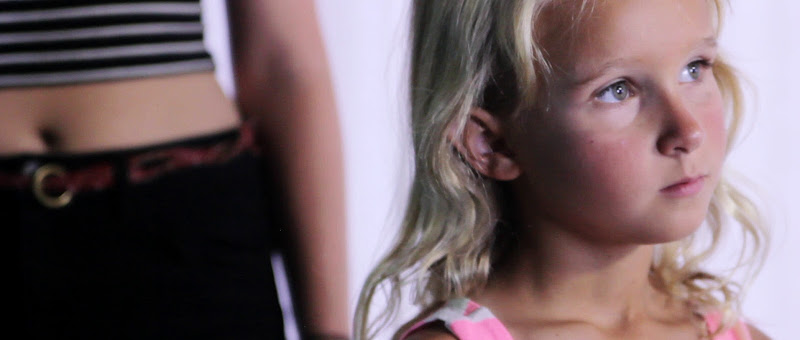
But it wasn't just about her shapely tummy. Without her in the background, I knew the edit would have felt odd. Cutting to Carley by herself in the frame would have given off the wrong impression, like she was abandoned or alone. It would have made the world feel like it had shifted and the others had disappeared. That can be a very powerful thing to do if you want to isolate a character, but it's bad when you want your scene to flow by unnoticed. We expect to see Abby back there, so by moving her over a smidge, the continuity holds, even if we "cheated" the positioning.
The Tutorials I Watched
I mention two tutorials in the BTS video, and I wanted to make sure
I could find them again in the future you could find them.
- How to make a super bright LED light panel (for video work etc)
- DaVinci Resolve Tutorial - Professional Color Correction / Grading (it gets good around 1:30)
Now, as you can tell from the Behind the Scenes, I simplified the LED light panel build. I used three power bricks per panel and didn't bother with a cover. But after talking with Tori, one of the models, at the film premiere, she told me I really needed to add some heat sink (not only is she a beautiful young woman, she also happens to be an Architectural Engineer and major lighting nerd who is focused on light design and knows a ton about LEDs). She urged me to add a sheet of some kind of heat conductive metal to both the LED and power brick sides of my build to help keep things cool. "The more heat sink, the better," she told me in a way that I could understand.
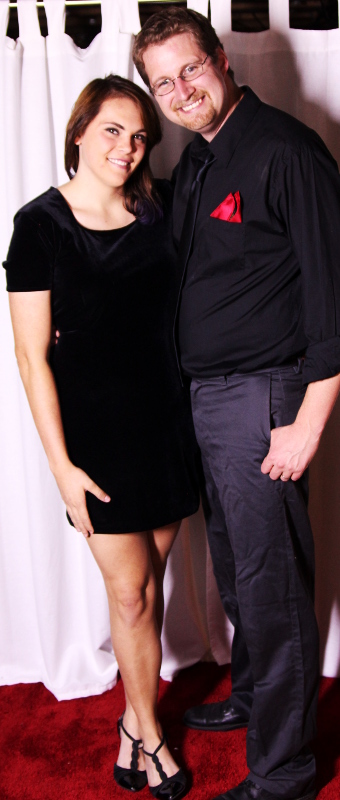
That's us on the red carpet at the premiere.
With that, I would also recommend using only, say, eight of the 10 strips for each brick. I'm assuming that running the power bricks at full capacity for hours on end probably isn't helping anything. Will you be missing a ton of light by reducing each panel by 20%? Eh ... I don't think it'll be noticeable, and if it lets you shoot longer because things don't overheat, it'd be totally worth it.
As for color correcting, I really don't have much to offer. I really appreciated how thorough and clear his video is. It took me, an absolute color correcting n00b, to a place where I felt comfortable with the tools in less than 15 minutes. Granted, I followed along, pausing at each step to try it myself.
Color Code Your Characters
No, I don't mean like the Power Rangers, nor am I talking about the whole Black Hat vs. White Hat good/bad distinction. This is far more practical.
So in the scene where Abby comes screeching into the studio, a billow of smoke behind her, she has a quick conversation with Tabby about Greer. We cut to her spilling her coffee.
When we cut back to the scene, in has walked Ashley with Carley. Ashley is in a red shirt.
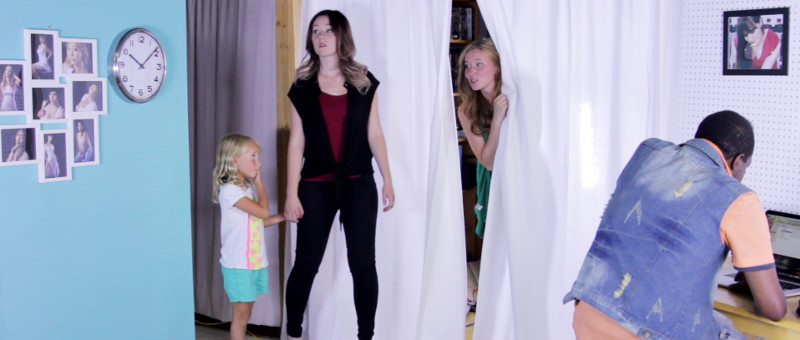
Here's the problem: Since we don't know Ashley yet, I was concerned the audience would initially think this was Greer, come to reclaim her photo slot or something. Then there'd be a moment of confusion when the line of dialog introduces a different name. Then the audience would have to make the huge jump to connecting Ashley to Abby as sisters while also catching who Carley is as we crank toward our first really big visual gag with the cat. It was too much.
Solution?
Make Greer's shirt purple.
The Speed of Editing (don't play to the music)
I know Jonathan made fun of me for my frenetic pace while cutting, but I get bored easily. Keep things moving. The first day of filming, we captured an hour and twelve minutes of footage. On my first pass, I trimmed this down to 45 seconds.
I tell my students all the time that your music should never dictate how long your scene is. Cut your music to fit your scene. After cutting the song I wanted down to those 45 seconds, I watched my edit.
It was felt about two times too long.
So I re-cut the music down to under 30 seconds.
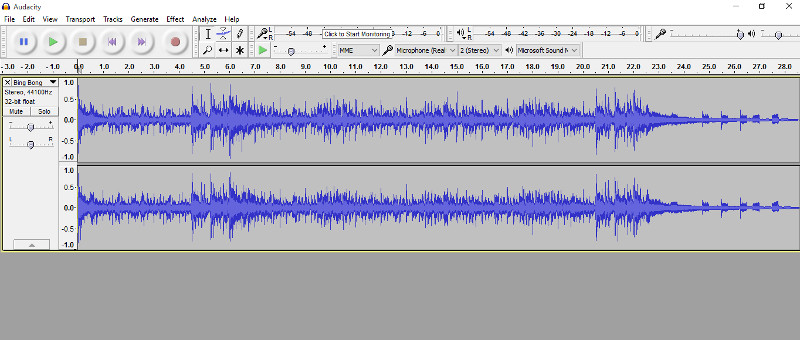
Taking over and hour of footage and turning it into 30 seconds of blazing fast edits takes time. In this case, about 8 edit days (taking into account learning a new NLE at the same time when I switched from Vegas Movie Studio to DaVinci Resolve).
It's Art (dialog)
Much of the storytelling in this piece is buried in the dialog. There is a bunch of talking that fills the movie. The nuances can get lost as we tear through the script at breakneck speed. The fact that Ashley hints at her immature photographer boyfriend ("Boys like you are so myopic"), the longstanding Tabby + Abby friendship ("Thanks, Tabs." / "No, Abs, thank you."), the thoughtfulness and limitless dreams of childhood ("I want to be a doctor, a docent, or a ventriloquist") all slip by, their depth unexplored.
The one theme I'm afraid is totally lost in the moment is the discussion of nudity in art.
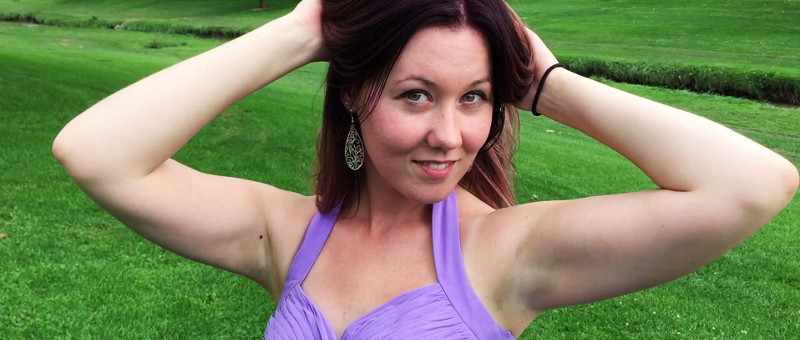
Ashley's boyfriend photographer claims that his photos are art, like
David or
The Birth of Venus. He cagedly starts with an example of male nudity before citing one of the most recognizable female nudes in history. These are both, most assuredly, artistic nudes. So what's the difference? Ashley senses there is one, but we don't explore precisely why.
But the question is an important one, and I hope people think about it, even if we don't take time in the middle of that scene to discuss it further.
There's more to say, to be sure. But I'll stop here. I'm happy to answer questions about whatever should you have any.
Thanks for watching!
~Luke Holzmann
Your Media Production Mentor
P.S. See more short films by Luke Holzmann here: http://www.production-now.com/shorts.html